Scuba Diving · 19 November 2025
I Got Lost During a Night Scuba Dive — Here's What Really Happened (And What You Should Do)
Night diving is magical… until it suddenly becomes terrifying.
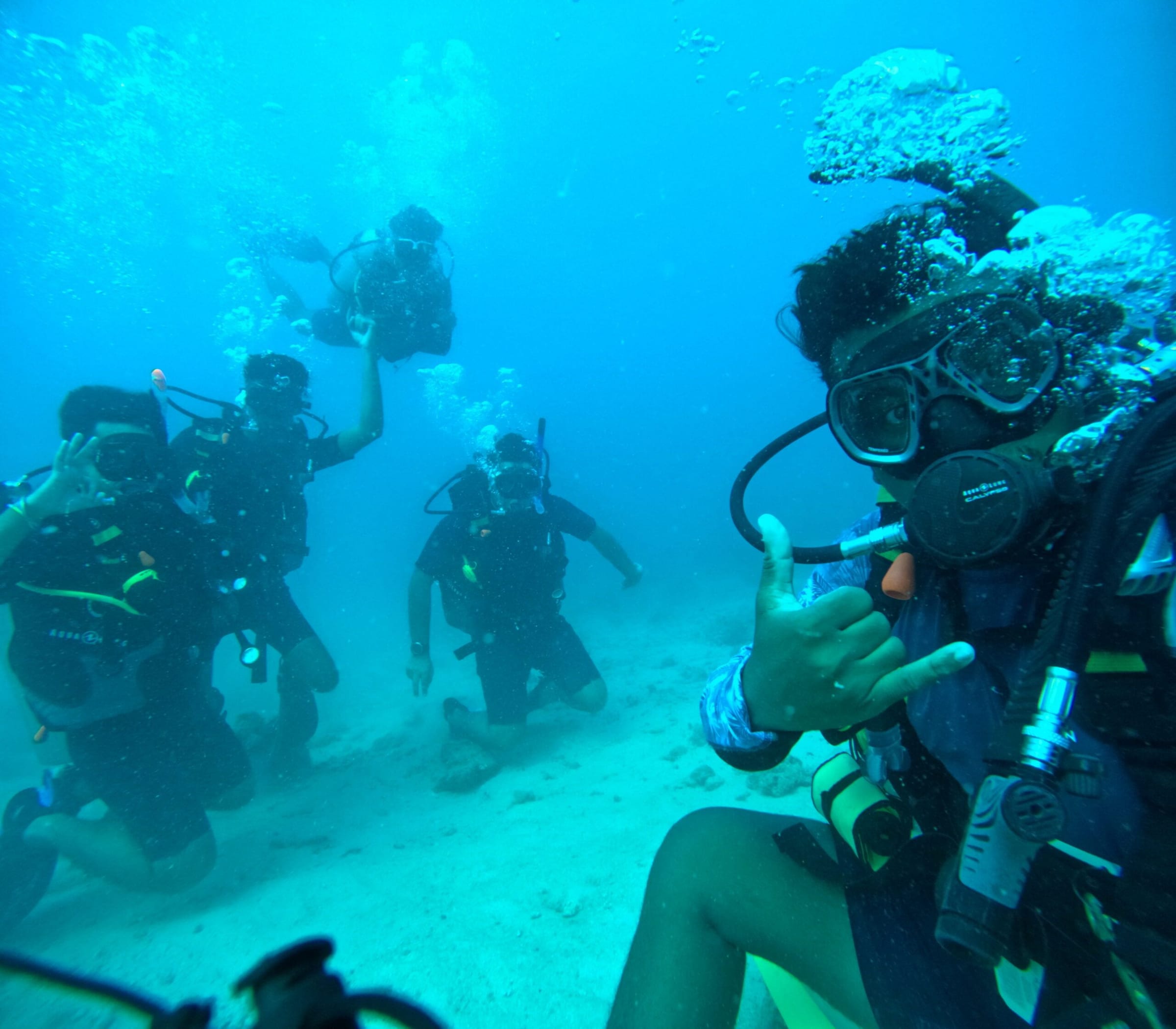
During my second night dive, I experimented with my dive weights — a decision that quickly spiralled into one of my scariest underwater moments. With fewer weights than usual, I couldn't descend properly and found myself floating 3–4 metres above everyone else while they explored the ocean floor.
The panic sets in
Toward the dive's end, we did the standard challenge: everyone sits on the ocean floor and turns off their lights for one minute. Since I was still hovering above the group, I joined in anyway.
When darkness fell completely, my mind raced. What if the current carried me away? Every second felt like an eternity. My breathing accelerated. Fear overwhelmed me.
I switched my light back on within moments and discovered I'd barely drifted — the shore was right beside me, and my group was ascending below.
What to do if you're lost on a night dive
- Stop and don't panic — control your breathing to stay clear-headed.
- Look for light beams — they travel surprisingly far underwater.
- Check your depth — stabilise your position.
- Ascend slowly if disoriented — a controlled ascent keeps you safe and visible.
- Wait at the surface — divers always return to the surface eventually.
- Trust your training — your dive education is designed for these moments.
Get proper training
Night diving requires certification. Take the Advanced Open Water Diver Course for mandatory night dive training, or start with the PADI Open Water Diver Course if you're a beginner.
Despite the scare, night diving remains magical and worth experiencing — but only with proper training and instructors.
Comments (0)
No comments yet. Be the first to share your thoughts!
Adventure sports